Top 5 Best Opening Chess Moves

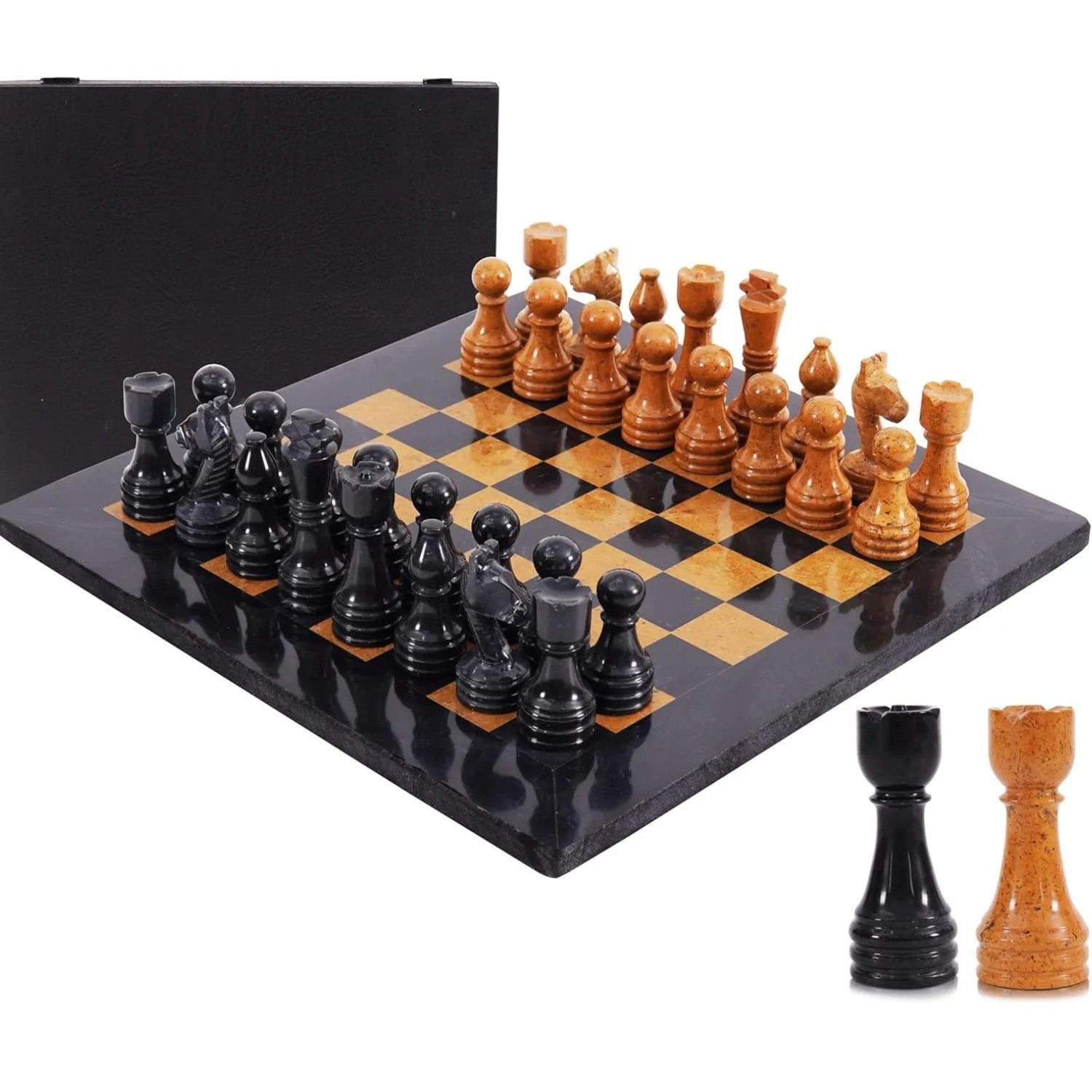
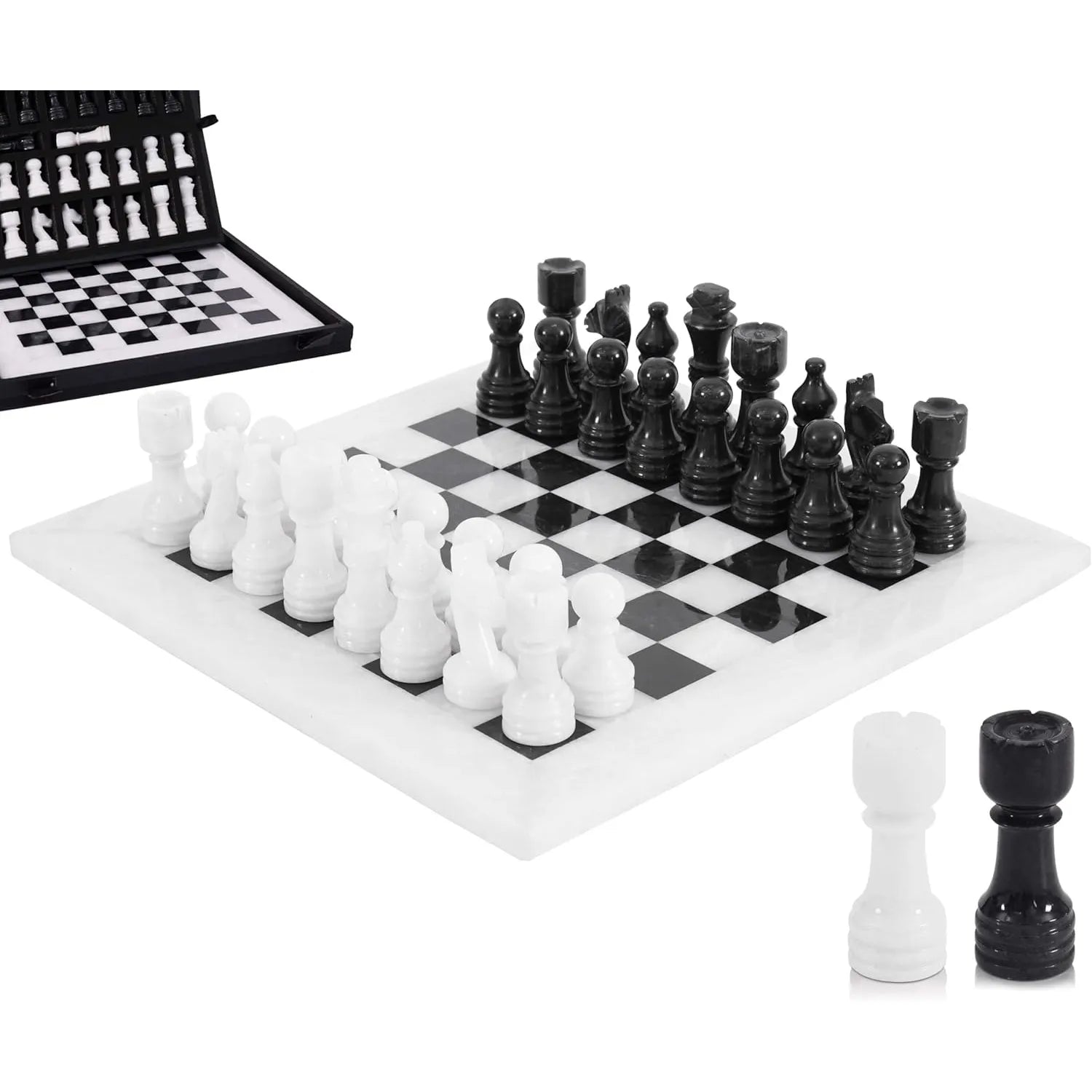
Chess openings are the first moves of a game — and they set the tone for everything that follows. A well-chosen opening helps you control the centre, develop your pieces quickly, and create a pawn structure that works in your favour. Whether you are playing on a classic set or a luxury marble chess set, understanding openings is one of the fastest ways to improve your game.
In this guide, we break down the five most important chess openings — three for White and two for Black — with the pros and cons of each so you can choose the right one for your playing style. Chess belongs to a rich family of strategy games, and just like in backgammon or marble checkers, how you begin determines how you finish.
💡 Key principle: Every opening in chess has strengths and weaknesses. The best opening is the one you understand most deeply — not necessarily the most aggressive one.
Openings for White
The King's Pawn Opening (e4)

The most popular opening for White — and one of the most aggressive. By advancing the King's pawn two squares to e4, White immediately claims central space and opens lines for the Bishop, Knight, and Queen to develop quickly. It is the opening preferred by many attacking players and is used at every level of the game, from beginners to world champions. Many of our customers who play on marble sets favour this bold opening.
✓ Pros
- Centre control — the pawn on e4 controls the key d5 square
- Opens lines — develops Bishop, Knight, and Queen quickly
- Aggressive pressure — puts Black under immediate strain
- King-side attack — enables a pawn storm with f4, g4, h4
✗ Cons
- King safety risk — exposes White when Black plays d5
- Pawn structure — can create weaknesses if not managed well
- Reduced mobility — limits pieces on d4, c4, and f4
The Queen's Pawn Opening (d4)

A slightly more positional choice than e4, the Queen's Pawn Opening advances White's d-pawn to d4, controlling the e5 square and building a strong pawn centre. It leads to more strategic, less tactical games — ideal for players who prefer to build their advantage slowly and solidly. Explore our best-selling marble chess sets and see this opening come to life on natural stone.
✓ Pros
- Centre control — controls the vital e5 square
- Piece development — opens lines for Bishop, Knight, and Queen
- Solid pawn centre — strong foundation with c4 and e4 pawns
✗ Cons
- King safety risk — can be exposed when Black plays d5
- Reduced mobility — limits c4 and e4 pawn movement
- Less aggressive — does not apply immediate pressure like e4
The Knight Opening (Nf3)

A flexible and solid opening that develops the Knight to f3 — controlling the centre with pieces rather than pawns alone. It also prepares to castle early, keeping the King safe from the start. This opening can transpose into many other well-known openings depending on how Black responds, making it a versatile choice for White. If you enjoy learning the strategic side of chess, our luxury marble chess sets make every opening session feel special.
✓ Pros
- Flexible — can transpose into King's Pawn, English, or Reti openings
- Safe — develops the Knight and prepares early castling
- Solid centre control — uses pieces rather than exposed pawns
✗ Cons
- No immediate centre — Black can gain central space quickly
- Knight exposed — Black pawns can challenge the Knight directly
- Symmetrical risk — can lead to equal positions that are hard to break
Openings for Black
The Sicilian Defense (c5)

The most popular and respected response to White's e4 — and one of the sharpest openings in all of chess. Black plays c5, refusing to let White dominate the centre and instead creating an asymmetrical position full of tactical possibilities. It is the opening of choice for players who prefer dynamic, counter-attacking chess. Many of the world's greatest players have used the Sicilian to defeat White's most aggressive attacks. Find a set worth playing these sharp positions on in our marble chess sets collection.
✓ Pros
- Fast development — allows Black to develop and control key squares quickly
- Counter-attack — leads to sharp tactical positions with strong Black counterplay
- Flexible — many variations suit different playing styles
✗ Cons
- Complex — requires deep knowledge of pawn structure and counterplay
- White initiative — White has many aggressive responses and can gain momentum
- Cramped risk — Black can end up in a difficult position if not played carefully
The Queen's Gambit (d5)

One of the oldest and most respected openings in chess. White plays d4 followed by c4, offering a pawn for rapid development. Black can accept the gambit or decline it — either way, the result is a solid, strategic battle with rich positional play. The Queen's Gambit became famous worldwide through the Netflix series of the same name — but it has been a cornerstone of top-level chess for over a century. Browse our gifts under $100 collection for a set that brings this classic opening to life.
✓ Pros
- Centre control — Black gains quick control and open lines
- Queenside majority — creates potential for a passed pawn or attack
- Solid structure — strong pawn centre that is difficult for White to break
✗ Cons
- Complex — requires understanding of pawn structure and counterplay
- White has options — many strong responses available for White
- Positional — less sharp than the Sicilian, may not suit attacking players
Conclusion
Chess openings are the foundation of every game. Whether you prefer the aggressive King's Pawn, the solid Queen's Pawn, the flexible Knight Opening, the sharp Sicilian Defense, or the classic Queen's Gambit — the key is to study your chosen opening deeply and understand the ideas behind each move.
The more you play, the more these openings become second nature — and the more you will begin to see the game several moves ahead. Set up your board, pick an opening, and start practising on a handcrafted marble chess set that makes every game feel like an occasion.
Shop Marble Chess Sets →Frequently Asked Questions
Q1: What is the best chess opening for beginners?
The King's Pawn Opening (e4) is widely recommended for beginners. It is straightforward, aggressive, and immediately teaches the importance of controlling the centre of the board.
Q2: Should I memorise chess openings?
Understanding the ideas behind an opening is more important than memorising every move. Focus on the principles — control the centre, develop your pieces, and castle early — and the specific moves will follow naturally.
Q3: What is the Sicilian Defense?
The Sicilian Defense is Black's response to White's e4, played as c5. It is the most popular and statistically successful response to e4 at the highest levels of chess, known for sharp, counter-attacking play.
Q4: What is the Queen's Gambit?
The Queen's Gambit begins with d4 followed by c4, where White offers a pawn in exchange for rapid development and centre control. Black can accept or decline the gambit — either way, it leads to rich strategic play.
Q5: How many chess openings are there?
There are hundreds of named chess openings and thousands of variations. Most players focus on mastering two or three openings thoroughly rather than learning many superficially. Depth beats breadth in chess study.
Capturing Pieces In Chess: Tips And Tricks
How Each Chess Pieces Moves: A Step-By-Step Guide
Related Posts

40th, 50th and 60th Birthday Gifts They'll Actually Keep

Luxury Gifts $150+: When to Spend Up

Marble Gifts Under $100 That Do Not Look It

Graduation Gifts That Last: The First Chess Set They'll Actually Keep

What Is in the Box, and Why It Gifts Well

Black Friday: What a Real Discount on Marble Looks Like

Secret Santa or Statement Gift? Under $100 vs Luxury