Marble Veining vs Structural Defects: A Guide to Stone Quality

When you invest in a luxury marble chess set, you aren't just buying a game—you are acquiring a piece of geological history. One of the most defining characteristics of authentic marble is its "Veining"—the intricate, flowing lines that dance across the surface. However, for many first-time buyers, a common question arises: Is this line a mark of beauty, or is it a structural defect?
In this comprehensive guide, we will break down the science of marble patterns, helping you distinguish between Nature’s artwork and actual damage so you can shop with absolute confidence.
1. What is Marble Veining? (Nature’s Fingerprint)

Marble is formed over millions of years deep within the earth. As limestone undergoes intense heat and pressure, it "metamorphoses" into marble. During this process, other minerals like iron oxide, silt, or clay become trapped, creating the colored lines we call veins. Because these minerals settle randomly, no two marble boards—and no two chess pieces—will ever be identical.
Characteristics of Beautiful Veining:
- Internal Depth: The lines appear to be "inside" the stone, rather than just on the surface.
- Seamless Finish: High-quality veining is completely smooth to the touch, integrated perfectly into the polished surface.
- Rhythm: The patterns often follow a "flow" that mirrors the natural cooling of the earth's crust.
2. Fissures vs. Cracks: Knowing the Difference

One of the biggest misconceptions in the stone industry is confusing a "fissure" with a "crack." Understanding this distinction is vital for any collector of fine stone products.
| Feature | Natural Fissure / Vein | Actual Crack (Defect) |
|---|---|---|
| The Touch Test | Completely smooth. Your fingernail will glide over it without catching. | Rough or jagged. You will feel a physical "gap" or catch. |
| Light Interaction | Light reflects evenly off the polished mineral line. | Light is "absorbed" or shadowed within the fracture. |
| Durability | Does not affect strength; it is as solid as the rest of the board. | Structural weakness that could lead to breaking. |
3. Exploring Stone Varieties and Their Patterns

The type of stone determines the "drama" of the veining. Here is what to expect from our most popular collections:
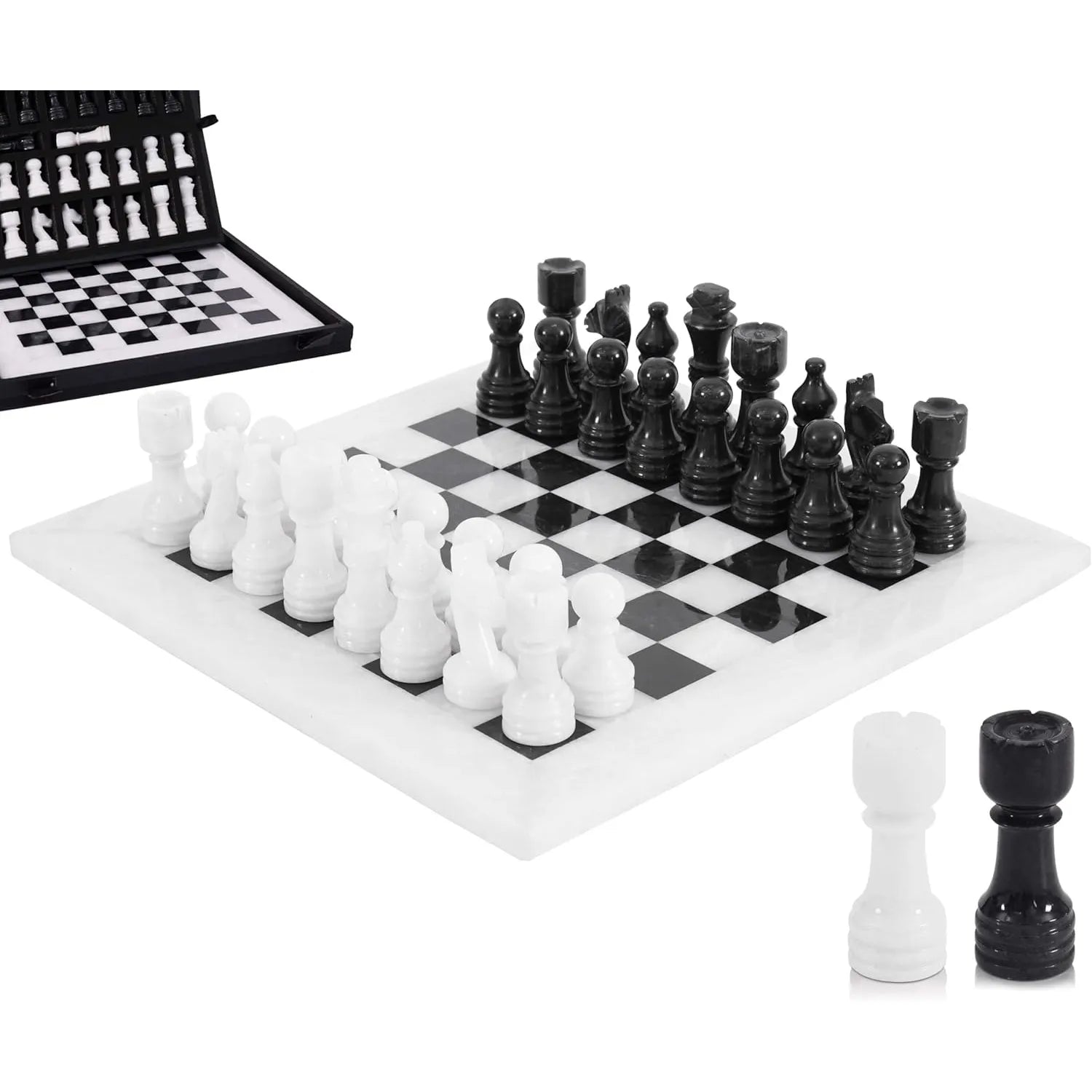
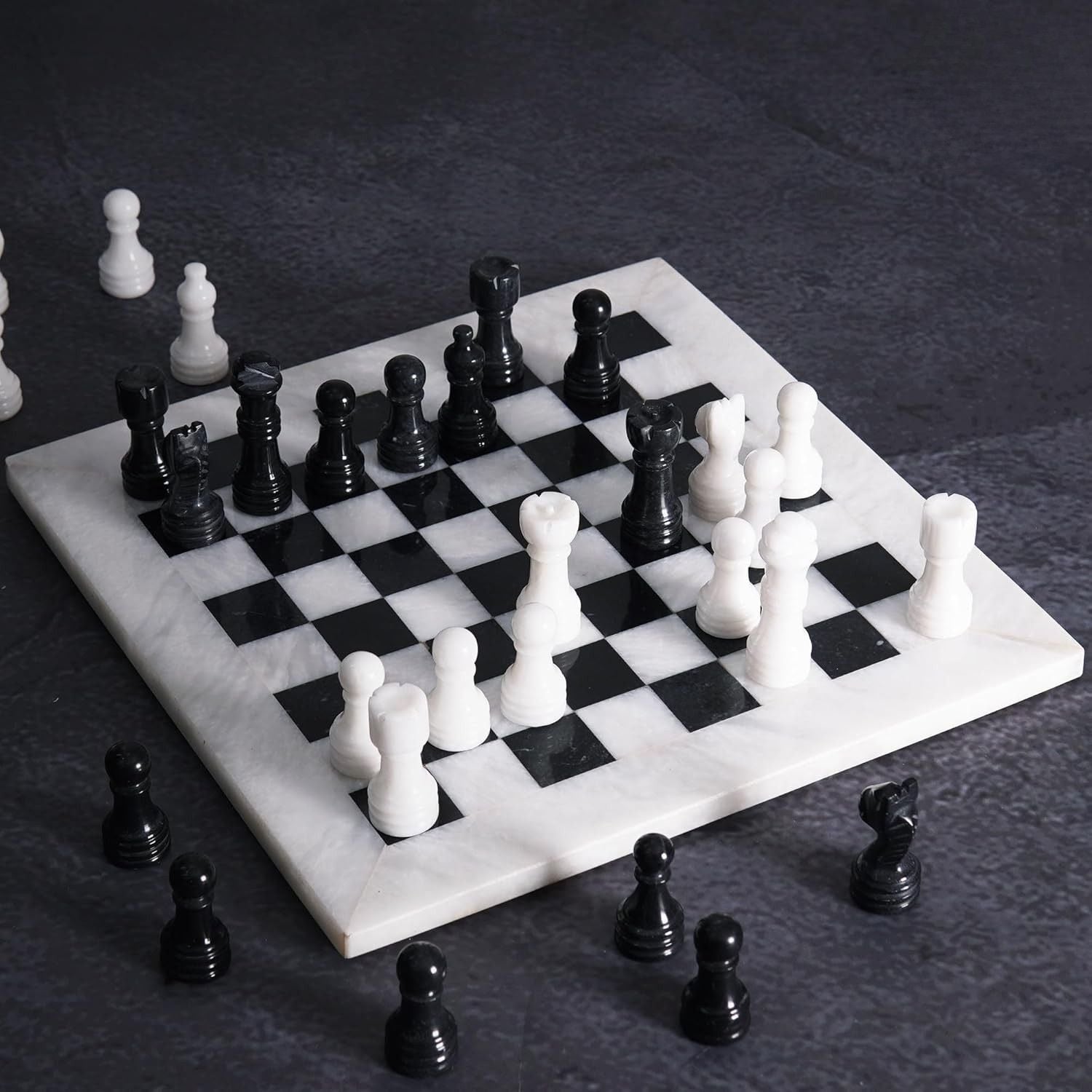
- Ziarat White Marble: Famous for its delicate, misty grey "whispering" veins. It is the pinnacle of clean, sophisticated design found in our White and Black Marble Chess set.
- Green Onyx: Known for "Clouding" and concentric circles. These aren't defects; they are crystalline formations that allow light to pass through the stone, visible in our Green Onyx sets.
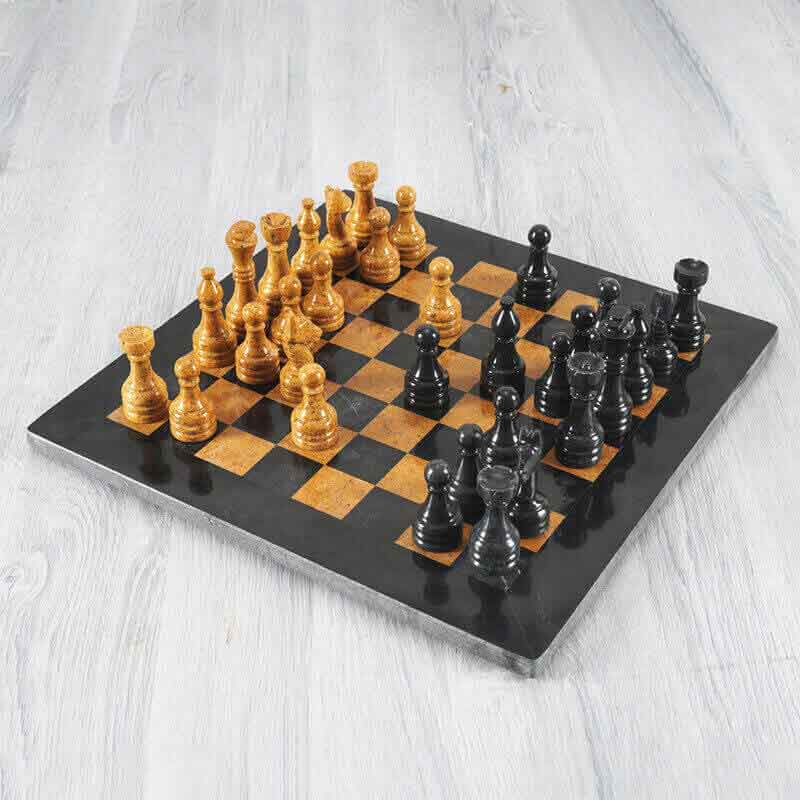
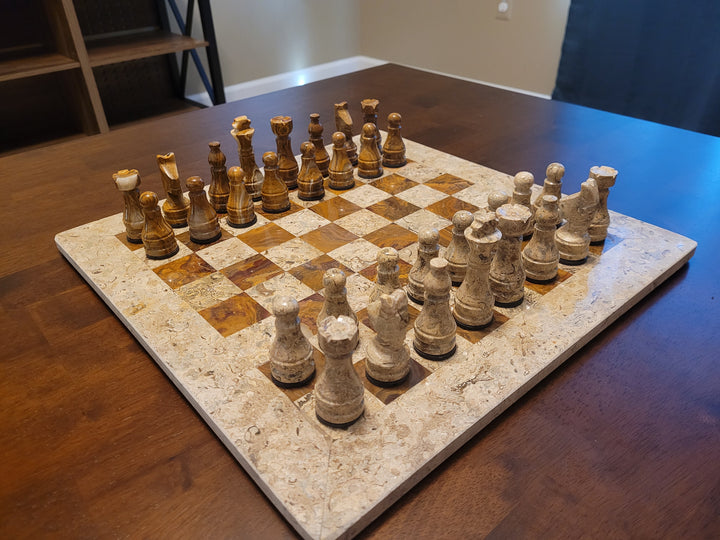
- Black & Brown Marbles: These stones often feature high-contrast "Spider-Web" veining, which you can admire in our Coral and Brown marble series.
SHOP HANDCRAFTED MARBLE CHESS SETS


4. The Authenticity Factor: Why Patterns Matter
In a world of mass-produced plastic and synthetic resin, the unpredictable veining of marble is a certificate of authenticity. When you see a "flawless" stone set with perfectly repeating patterns, it is often a sign of imitation stone. Genuine handcrafted marble embraces its irregularities. These mineral deposits are what make your set a one-of-a-kind heirloom that appreciates in aesthetic value over time.
5. The Royal Bishop Standard of Quality
At Royal Bishop, we respect the natural soul of the stone. Our master artisans hand-pick every slab, ensuring that only boards with structurally sound and visually stunning veining reach our workshop. While we reject pieces with structural damage, we celebrate the unique mineral streaks that prove your chess set is a genuine creation.
A Pro Tip for New Owners
If you notice a deep color line but the surface feels as smooth as glass, you have a perfectly healthy natural vein. This line makes your set unique—there is not another one like it in the entire world. Explore our luxury chess figures to see these patterns in detail.
Frequently Asked Questions
1. Will natural veining turn into a crack over time?
No. Natural veining and fissures are part of the stone's permanent molecular structure. Unless the board is dropped or hit with extreme force, these patterns will remain unchanged for centuries.
2. Why do my white pieces have different vein patterns than my opponent's pieces?
That is the beauty of natural marble! Since each piece is carved from different sections of the stone slab, the "flow" of minerals is always unique. This variability is the hallmark of a genuine handcrafted product.
3. Does heavy veining make the chess board harder to play on?
Not at all. Our boards are polished to a high-gloss finish, ensuring the squares remain distinct and the pieces slide effortlessly, regardless of the mineral patterns underneath.
4. How can I tell if a line is a crack or a vein just by looking?
A vein usually has a soft, feathered edge and follows the general color palette of the stone. A crack often looks like a sharp, jagged disruption that doesn't follow the natural flow of the surrounding minerals.
5. What should I do if I find a rough line on my board?
If you feel a physical "ledge" or a jagged gap that catches your finger, it may be a rare structural defect. We stand by our craftsmanship—please contact our support team or review our return policy for assistance.
How To Match A Marble Chess Set To Your Home Decor
Pairing Marble Pieces With The Right Board Material
Related Posts

40th, 50th and 60th Birthday Gifts They'll Actually Keep

Luxury Gifts $150+: When to Spend Up

Marble Gifts Under $100 That Do Not Look It

Graduation Gifts That Last: The First Chess Set They'll Actually Keep

What Is in the Box, and Why It Gifts Well

Black Friday: What a Real Discount on Marble Looks Like

Secret Santa or Statement Gift? Under $100 vs Luxury